A satellite photo of the Fukushima Daiichi plant showed the damage done to reactors 1 and 3, where there was an explosion on Monday
Thousands have perished and over 500,000 are now homeless after the quake and tsunami. Now, Japan is concerned over a nuclear meltdown. Sea water is now being pumped into the reactor, in hopes that it will prevent further explosions.
On Monday a hydrogen blast at the Fukushima Daiichi's reactor 3 injured 11 people and destroyed the building surrounding it. The explosion was felt 40km (25 miles) away and sent a huge column of smoke into the air.
It followed a blast at reactor 1 on Saturday.
Chief Cabinet Secretary Yukio Edano said there were signs that the fuel rods were melting in all three reactors.
Click title of post to read more.
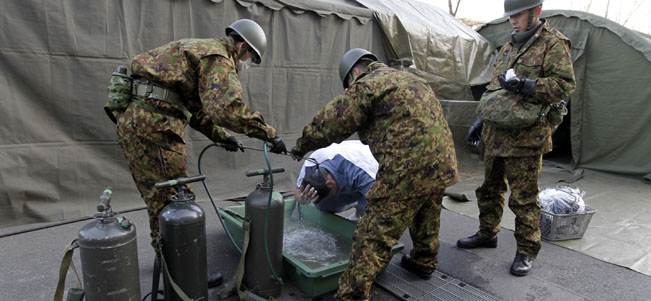
A man who was evacuated from the vicinity of Fukushima's nuclear power plant washes his head in Nihonmatsu, northern Japan, March 14, 2011.
A second explosion occurred in Japan at the nuclear plant. This was due to the workers trying to release pressure. The steam with hydrogen, mixed with oxygen in the atmosphere is what is being reported as the cause of this explosion.
SOMA, Japan – The second hydrogen explosion in three days rocked Japan's stricken Fukushima Dai-ichi nuclear plant Monday, sending a massive column of smoke into the air and wounding 11 workers. Hours later, the U.S. said it had shifted its offshore forces away from the plant after detecting low-level radioactive contamination.
The aircraft carrier USS Ronald Reagan was about 100 miles (160 kilometers) offshore when it detected the radiation, which U.S. officials said was about the same as one month's normal exposure to natural background radiation.
It was not clear if the radiation had leaked during the Monday explosion. That blast was felt 25 miles (40 kilometers) away, but the plant's operator said radiation levels at the reactor were still within legal limits.
Click title of this post for full story.